Goto main content

Sense International Partnerships

© Lucas Veuve / HI

Strengthening Inclusive Education Systems and Services in Nepal

Summary of Project 

This programme strengthened inclusive education systems in Nepal through a comprehensive, multi-level approach. By building teacher capacity, improving accessibility, and supporting government systems, it has increased access, participation, and learning outcomes for children with disabilities while contributing to sustainable, scalable change. Reaching over 3,000 children, the project demonstrates that inclusive education is both achievable and sustainable.

Objectives

The goal was to ensure that children with disabilities could access, remain in, and succeed in education by supporting enrolment, retention, and meaningful participation in learning. The programme prioritised reaching the most excluded children, including those with complex disabilities, through tailored approaches such as home-based education to ensure no child is left behind. It aimed to improve the quality of teaching through inclusive education practices, equipping teachers with the skills and tools needed to support diverse learning needs.

Primary Benificiaries

Children between the ages of 4 and 17 who have complex learning difficulties, sensory needs, or physical disabilities were supported. These children received direct support across 154 public community schools located within Kalika Municipality and Bharatpur Metropolitan City, inside the Chitwan District of Nepal.

Project Locations

This project operated under the wider Inclusive Futures programme, which reformed public school systems across Nepal, Bangladesh, Kenya, Nigeria, and Tanzania. By working across these five nations, our teams shared training tools, designed learning resources, and tested new teaching methods to help children with disabilities access education. This joint effort earned the project a global Zero Project Award for creating excellent education systems that leave no child behind.

A five-country initiative across Nepal, Bangladesh, Kenya, Nigeria, and Tanzania working to make public education more inclusive and accessible for children with disabilities.

Main Objectives

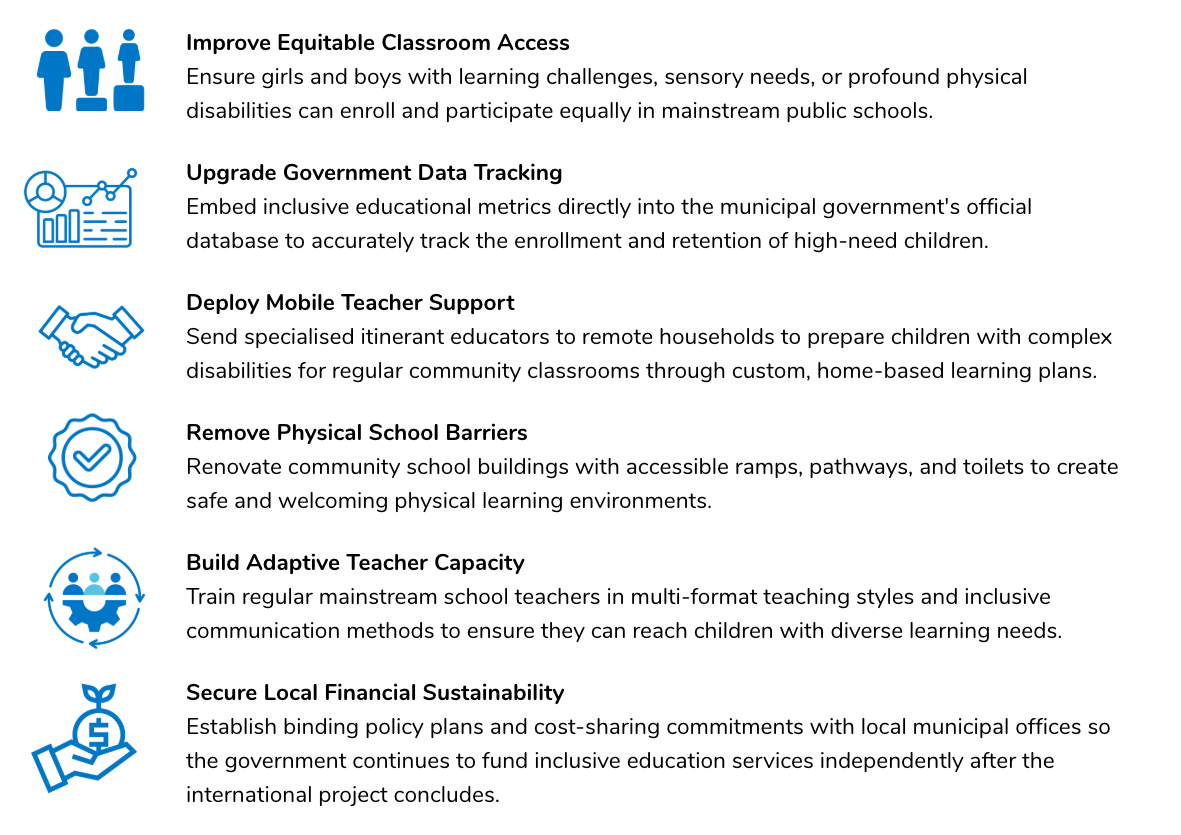
Main objectives: Six interconnected areas of action helped strengthen accessible, inclusive, and sustainable education for children with disabilities—from classroom access and teacher support to accessible infrastructure, government systems, and long-term

Project Impact 

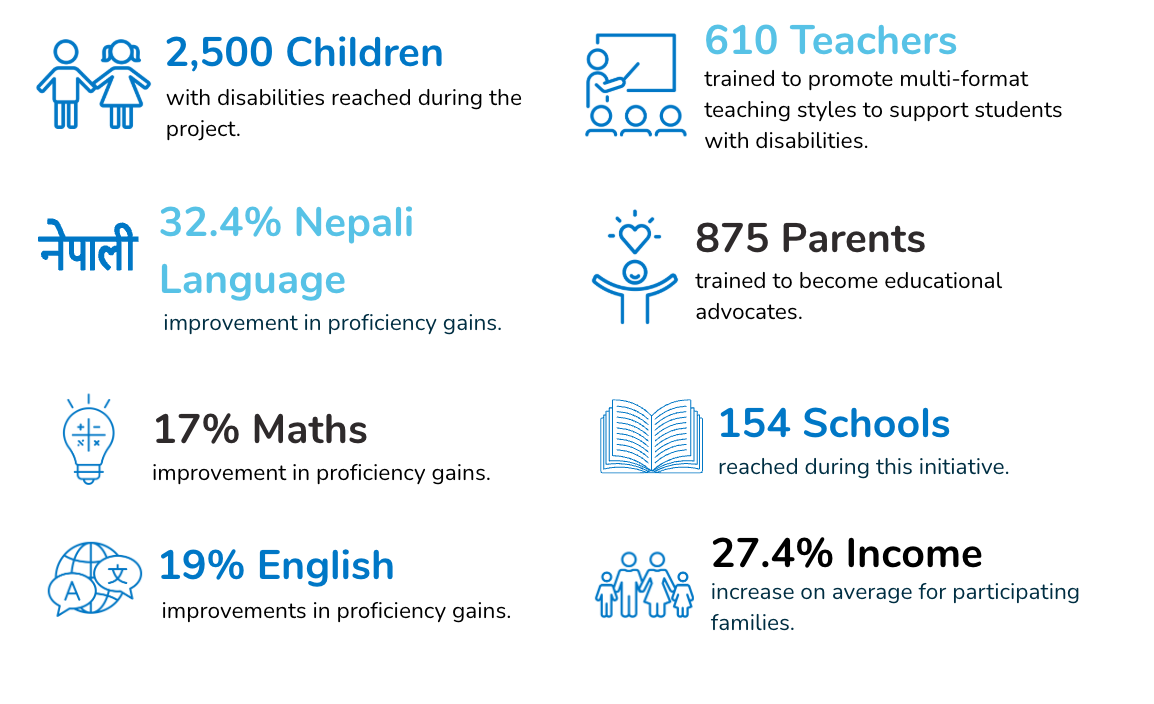
Project impact: The initiative reached children with disabilities across 154 schools while strengthening the wider support systems around them. Alongside reaching 2,500 children, the project trained teachers and parents, contributed to improvements in Nep

Sandip’s Story of Determination

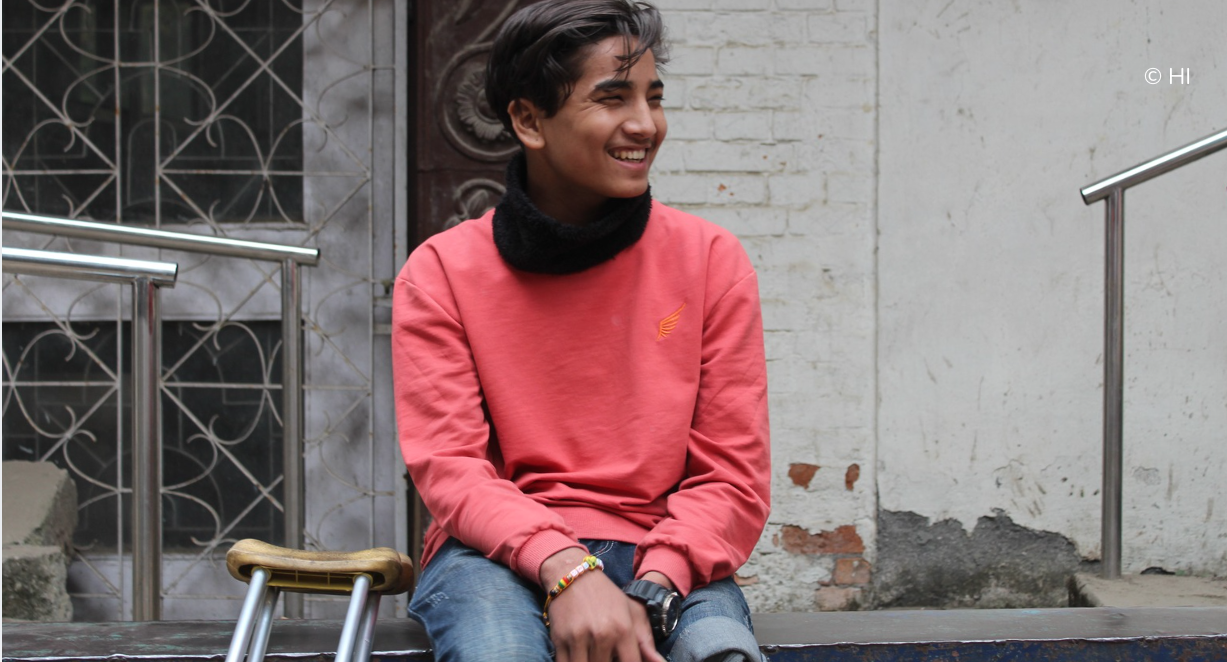
In Nepal, road accidents are a leading cause of childhood injuries. At age 14, Sandip was involved in a severe lorry accident that resulted in the amputation of his left leg above the knee. The injury not only affected his mobility but also disrupted his education. Struggling to adjust to his sudden disability and overwhelmed by feelings of shame, Sandip stopped attending school and gradually withdrew from his friends and community.

Rebuilding Confidence

Returning to education after a life-changing injury requires more than physical recovery. Children often face barriers such as low self-esteem, stigma, and uncertainty about their future. When HI staff first met Sandip at a local community health camp, he had lost confidence and no longer believed he could return to school or achieve his ambitions.

To support him, project inclusion officers provided counselling and shared stories of other people with disabilities who had overcome similar challenges to continue their education, find employment, and live independently. This support helped Sandip regain hope and begin to see that his disability did not have to define his future. As his confidence grew, so did his motivation to return to learning and rebuild his plans for adulthood.

Removing Barriers to Education

Access to education depends on more than enrolment. Children with disabilities often need rehabilitation and assistive devices to participate fully in school and community life.

Through a referral to the National Disabled Fund, HI supported Sandip to receive a prosthetic limb and rehabilitation services. As he learned to walk independently and navigate everyday environments with greater confidence, the barriers that had kept him out of school began to diminish. Improved mobility helped him regain his independence, reconnect with his community, and re-engage with learning.

Renewed Ambition

Education plays a role in helping children build independent lives. Today, Sandip has replaced feelings of isolation with a determination to continue his studies towards his goals.

With support from the Inclusive Futures programme, he is now focused on completing his education and gaining skills for future employment. He hopes one day to open a mobile phone repair shop or pursue another career that will allow him to live independently.

By combining rehabilitation, counselling, and inclusive support, the project has helped Sandip return to learning and opportunity. He has regained confidence, renewed his ambitions, and is working towards a brighter future.

Donor

UK Aid: Supported with funding from the UK Government through UK Aid.

Consortium Partners 

Humanity & Inclusion: Consortium partner supporting the delivery of the Inclusive Futures programme, with expertise in disability inclusion and inclusive education.
Sense International: Consortium partner supporting the Inclusive Futures programme, with expertise in the inclusion of people with deafblindness and complex disabilities.


InBusiness Kenya: Unlocking Economic Opportunities for Entrepreneurs with Disabilities

Summary of Project

InBusiness Kenya was a disability-inclusive livelihoods programme that helped entrepreneurs with disabilities grow sustainable businesses, access new markets, and increase their incomes. Through business support, inclusive procurement opportunities, and systems change, the programme created lasting pathways to economic inclusion and greater financial independence across Kenya. It also worked with businesses and government institutions to promote disability-inclusive policies and practices that support long-term economic participation.

Objectives

The programme aimed to increase sustainable income and employment opportunities for people with disabilities by strengthening disability-inclusive business ecosystems. It supported entrepreneurs with disabilities to develop business skills, access finance and procurement opportunities, and grow sustainable enterprises. At the same time, the programme worked with businesses, government institutions, and OPDs to promote inclusive policies and practices that enable long-term economic participation and inclusion.

Primary Benificiaries

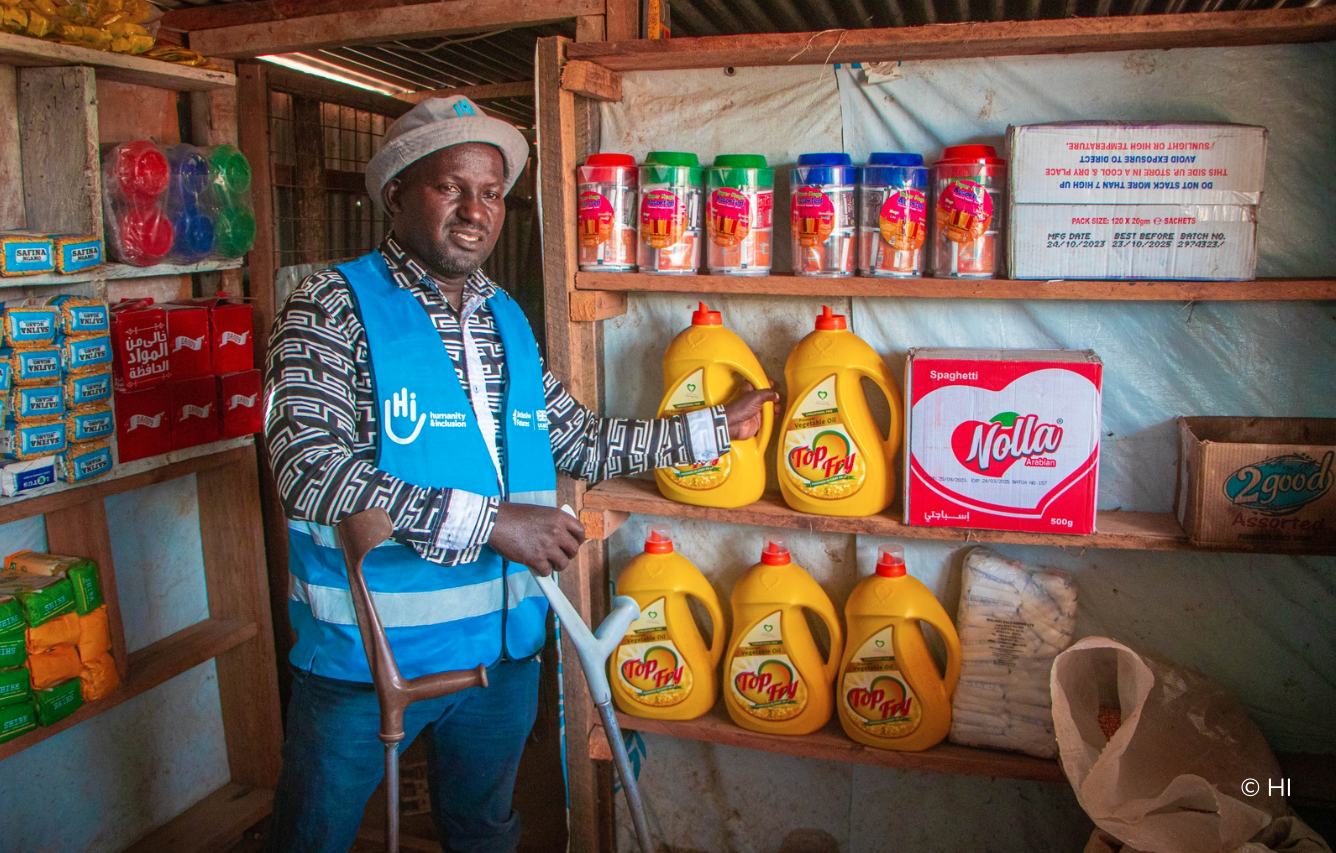
The programme primarily supported entrepreneurs with disabilities, including women with disabilities, refugees with disabilities, and people who are deafblind.

Project Locations

InBusiness Kenya was implemented across 11 counties—Kakamega, Homa Bay, Migori, Bomet, Kitui, Machakos, Nairobi, Kiambu, Meru, Turkana, and Laikipia—as well as Kakuma Refugee Camp and Kalobeyei Refugee Settlement. The programme worked in both urban and rural settings, reaching entrepreneurs with disabilities across diverse economic and humanitarian contexts.

Main Objectives 

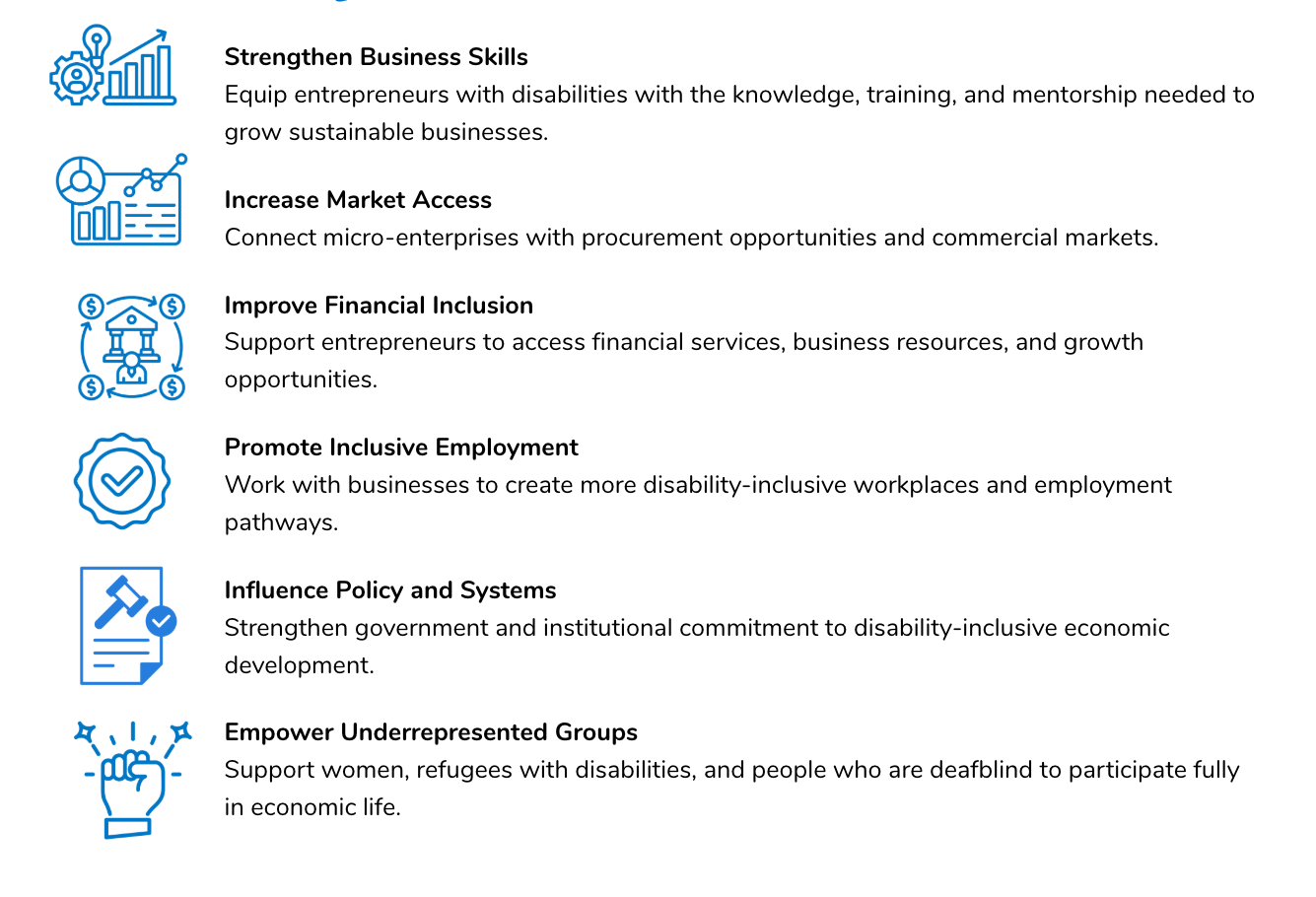
Project approach: The initiative strengthened disability-inclusive economic development by building entrepreneurs’ business skills, expanding access to markets and financial services, promoting inclusive employment, influencing policy and systems, and cre

Project Impact

The programme helped entrepreneurs with disabilities build stronger, more resilient businesses and participate more fully in Kenya’s economy. By combining business development support with improved access to procurement opportunities, inclusive institutional practices, and policy engagement, InBusiness addressed both individual and systemic barriers to economic participation. The programme demonstrated that when entrepreneurs with disabilities are connected to markets, networks, and supportive business environments, they can achieve sustainable growth, strengthen their livelihoods, and contribute meaningfully to local economic development.

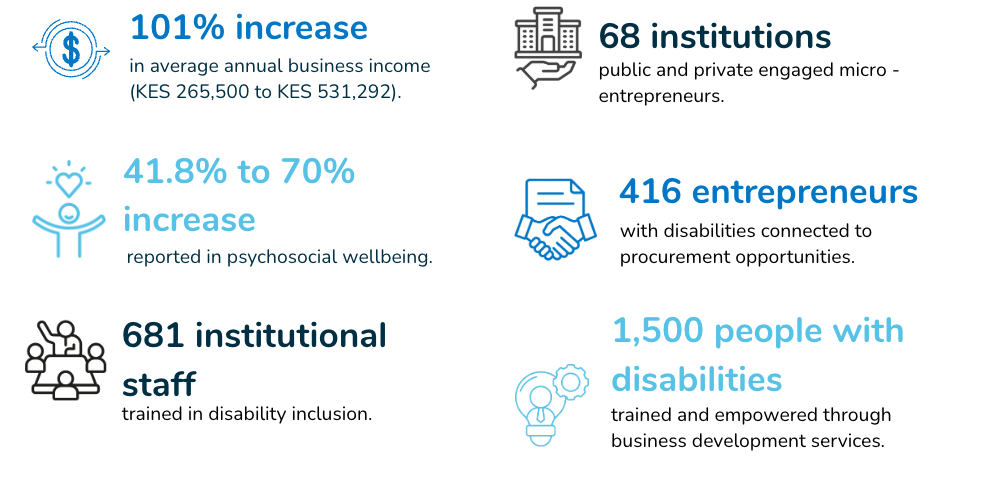
Project impact: The initiative strengthened economic opportunities for people with disabilities by increasing business income, improving psychosocial wellbeing, and connecting entrepreneurs to procurement opportunities. It also built longer-term disabilit

Donor 

UK Aid: Supported with funding from the UK Government through UK Aid.

Consortium Partners

Humanity & Inclusion: Consortium partner supporting the delivery of the InBusiness programme, with expertise in disability inclusion and inclusive education.
Sense International: Consortium partner supporting the InBusiness programme, with expertise in the inclusion of people with deafblindness and complex disabilities.
Light for the World: Consortium partner supporting the project with expertise in disability inclusion, inclusive economic development, and the economic empowerment of people with disabilities.
United Disabled Persons of Kenya (UDPK): Consortium partner representing and advocating for people with disabilities in Kenya and supporting their inclusion and participation in economic opportunities.