


An HI deminer working on the land around Santander de Quilichao in May 2022 | © J. M. Vargas / HI
An HI deminer working on the land around Santander de Quilichao in May 2022 | © J. M. Vargas / HI
Fifteen people, including two children, had already fallen victim to landmines in the municipality of Santander de Quilichao when HI started demining operations there. Our teams eventually cleared more than 2,500 m² of land. Santander de Quilichao is the first village to be declared mine-free in the north of Cauca, a department in south-west Colombia.
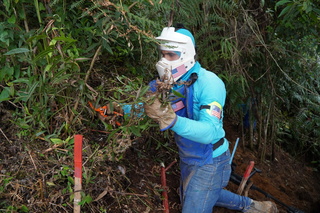 When HI was assigned the demining of the Santander de Quilichao area in 2019, the teams began by conducting an assessment of 518 km² of land to identify hazardous areas. They met with local residents to find out about the history of the area and determine which areas were contaminated. Four sectors were identified as presenting risks. HI then carried out mine clearance operations in these areas, finding and destroying 12 explosive devices.
Four years later, more than 2,500 m² of land have been made safe in Santander de Quilichao, benefiting some 112,000 people. The villagers can now freely dispose of their land and go about their daily business in safety. Agriculture, the mainstay of the local economy, has taken off again, with the cultivation of coffee, sugar cane, pineapple, cassava and banana crops.
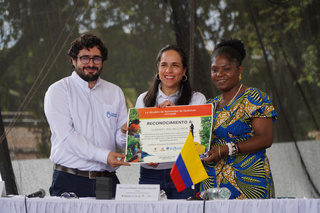 The municipality of Santander de Quilichao is multicultural and multi-ethnic, home to Afro-Colombian, peasant and indigenous populations. To take into account the needs of all the communities, HI worked with local partner organisations, such as Tierra de Paz, as well as with community liaison officers – women and men recognised as leaders by their peers.
To help reduce armed violence, HI also conducted 30 mine risk education workshops. These workshops enabled more than 1,500 people to broaden their knowledge of explosive devices and learn the safety measures to adopt in the event of a risky situation, In order to support the economic integration of the region's inhabitants, HI also supported 10 agricultural and commercial projects launched by the communities, such as the development of layer poultry farms and the creation of a handmade soap business.
In Colombia, HI is currently carrying out demining operations in the departments of Antioquia, Chocó, Tolima, Meta and Cauca. These operations are made possible thanks to the support of the Office of Weapons Removal and Abatement in the US State Department's Bureau of Political-Military Affairs (PM/WRA).