


Awarding of the Nobel Peace Prize to the International Campaign to Ban Landmines, Oslo, December 1997. | © ICBL
Awarding of the Nobel Peace Prize to the International Campaign to Ban Landmines, Oslo, December 1997. | © ICBL
In the 1980s and 1990s, on average 26,000 people a year were killed by anti-personnel mines. The vast majority were women and children.
Outraged by this injustice, Humanity & Inclusion (HI) co-founded the International Campaign to Ban Landmines (ICBL) in 1992. The coalition’s campaign to outlaw these “cowardly weapons” lasted five years.
The campaign led to the formation of a global community protest movement. Within five years, it had won a key victory: the signing of the Mine Ban Treaty or Ottawa Convention in December 1997. The first treaty to ban a conventional weapon, it was signed by 121 States. Today it has 164 States parties.
The same year, the members of the ICBL, including HI were awarded the Nobel Peace Prize for their “role in the promotion of international efforts for a total ban on anti-personnel landmines.”
The prize recognised the tenacity of these civil society organisations in pressuring States to ban this weapon.
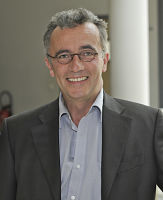 “As well as being extraordinarily fast, the Ottawa process rewrote the diplomatic rule book on drawing up international treaties. The pressure from NGOs, the media and public opinion opened the way for a form of public diplomacy powerful enough to hold the conventional diplomatic system in check. A decade earlier, many considered the astonishing proliferation of mines and the rise in civilian casualties as “collateral damage” of conflicts. […] The Ottawa Convention was, in effect, not universally legally binding. However, it set a new standard of behaviour that had a political influence on the attitudes of non-signatory States. […] HI was awarded the Nobel prize, which gave us much greater visibility. The success of our international campaign still serves as a model, two decades on, for other NGOs who want to shift institutional lines in order to work on the causes of the tragedies they are committed to fighting.” Philippe Chabasse, former co-director of HI, responsible for the ICBL campaign.
For HI, this fight does not end with the ban on anti-personnel mines or the clearance of contaminated areas. We must also help victims rebuild their lives and livelihoods. The organisation continues to pursue its campaign and leads armed violence reduction programmes in 18 countries. This requires HI to work in extremely fragile situations, such as those in Iraq and Syria, and in countries contaminated by mines or explosive devices left over from previous conflicts, like Colombia and Chad.
Civilians continue to bear the brunt of other weapons, including cluster munitions, which HI helped ban under the Oslo Treaty in 2008.
Since 90 percent of bombing casualties in populated areas are civilians, HI is now leading the EWIPA campaign to end the bombing of urban areas.
Mines killed or maimed 7,000 people in 2020, of whom 80 percent were civilians: the fight to end the use of anti-personnel mines and protect civilians is far from over.