

The Al-Rashid bridge is being rebuilt after clearance operations led by HI. | © HI
The Al-Rashid bridge is being rebuilt after clearance operations led by HI. | © HI
The Al-Rashid Bridge in the southwest of Raqqa in Syria is a vital link between the city and the towns on the other side of the Euphrates River
It was destroyed during the fighting in the city in 2017, seriously disrupting transport and travel ever since.
The restoration of an old bridge a few years ago alleviated some of the problems, but heavy machinery, trucks, and buses still had to make a long detour via the west of Raqqa to access Tabqa and join the Aleppo Road. Travel to other Syrian governorates remained complicated.
The reconstruction of the Al-Rashid Bridge had been impossible because of the presence of explosive ordnance, especially in the waters of the Euphrates. Most of this contamination was due to bombs that had been dropped on the bridge during the conflict failing to explode on impact.
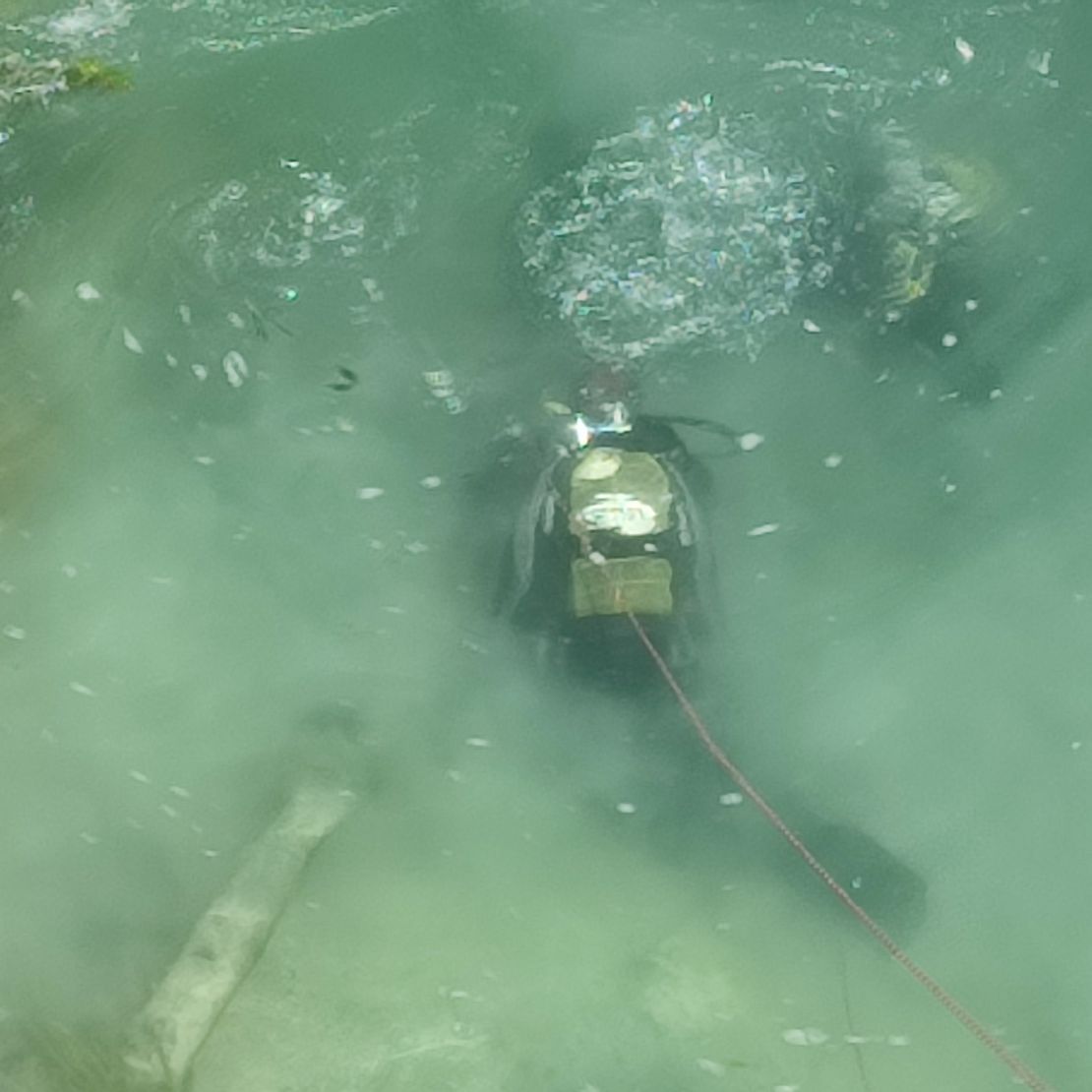 Last May, a team of 12 HI underwater clearance staff, supervised by a mine-clearance divemaster, worked for five days to clear the area and allow the city’s civil engineering team to start rebuilding the bridge.
The environment was challenging due to fast water currents and limited visibility of the explosive remnants scattered across the area. The presence of debris from shattered tiles and bricks added to the complexity of the task.
The underwater clearance team successfully neutralised, removed and destroyed 109 explosive items, including rocket-propelled grenades, projectiles and main charges that had been hindering the local authorities' efforts to rebuild Raqqa Bridge.
“This project shows how reconstruction begins with clearance. In Syria, urban and suburban areas are still affected. You find the widest range of explosive ordnances in cities, including in their water sources. Eighty percent of the city [of Raqqa] was destroyed during the fighting. In 2023, many buildings and infrastructures are still contaminated, abandoned or unsafely used as shelter by displaced people. Clearing urban areas directly contributes to the safety and well-being of the communities and facilitates reconstruction.”
Sara Alves, HI North-East Syria Programme Coordinator
As well as removing the hazardous items around the bridge, the team extended the zone to be cleared to allow the contractor to work in a safe environment without the ever-present danger of explosive ordnance.
6,500 square meters of land have now been cleared to a depth of 8 metres.
The area around the bridge is now safe and the rehabilitation and land backfilling processes are underway. Hopefully, in a few months, traffic will resume on the bridge and Raqqa’s links with the rest of the region will be fully re-established.