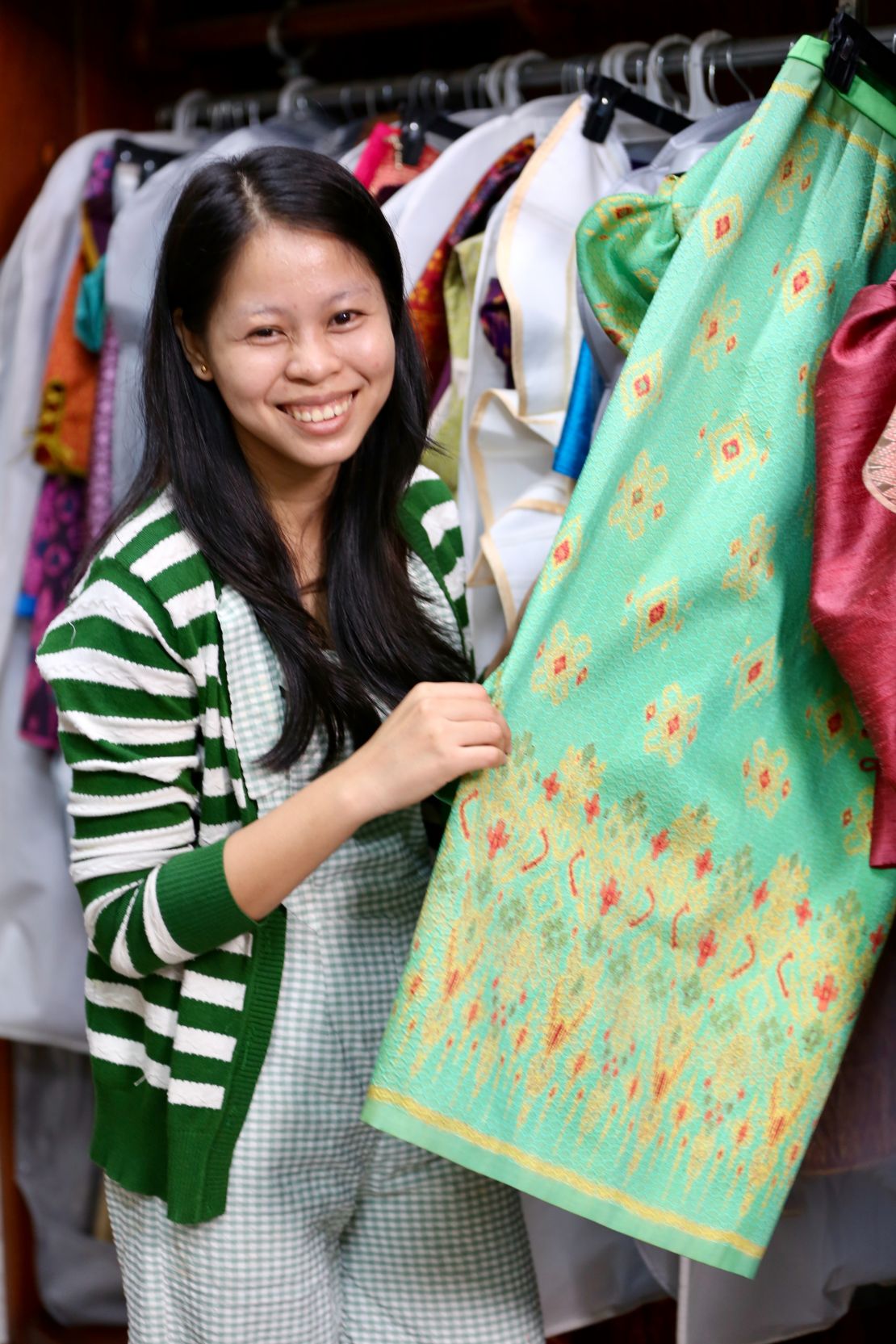
Her room, filled with cuddly toys and Hello Kitty posters, looks like that of a child. But Kanha has grown up a lot since she first met HI’s teams. The young woman, who was only seven when she fell victim to an explosive remnant of war, is now 24 years old and lives amidst the hustle and bustle of Phnom Penh where she moved to find work. A far cry from the rural province of Tbong Khmum where she grew up.
 It's 7 o'clock in the morning, and Kanha is getting ready to leave for the sewing workshop where she has been working for the last four years. Every morning, she walks to her manager's home and they travel to work together in a "tuk-tuk", a Cambodian motorised tricycle. If she has time, Kanha stops off at a small grocery store in her neighbourhood to buy something for breakfast and build up her strength for the day ahead.
Kanha works alongside ten other women making wedding dresses and women's clothing for religious ceremonies. She goes back and forth between customers, the sewing room and the loom - standing, sitting, standing again... It's tiring work, especially for someone with a prosthesis, and demands a lot concentration and skill.
Kahna loves her job and also enjoys being with her colleagues and manager. She doesn't know many people in Phnom Penh, so she spends most of her time with them. Every lunchtime, the team gathers around a table and has lunch together.
"We all laugh together and tell each other our stories... I'm quite a quiet person, not very talkative, a bit shy at times", she tells us.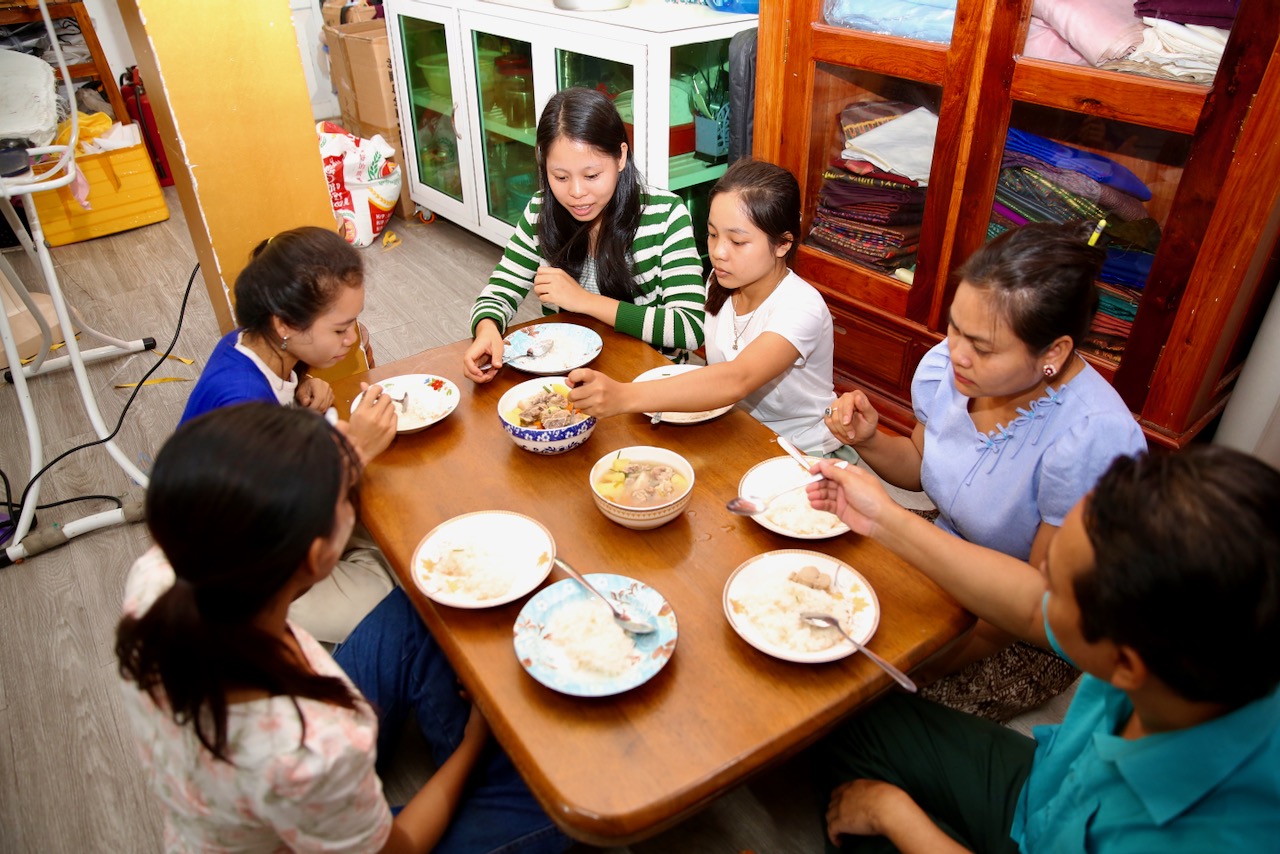
When she gets home, Kanha has a recipe for relieving the day’s stress and tension: K-Pop and horror stories! With her huge headphones on, she listens to her playlists of Korean singers for hours and then loses herself in ghost or vampire stories written by Cambodian authors.
"To all the people who are in the same situation as me, I’d like to say that they must try to overcome their disability, stay strong and never give up!”
An encouraging message, she hopes, for all people with disabilities. Eighteen years after her amputation, the young woman is determined to keep moving forward! Initially interested in fashion and design, Kanha recently decided that she wanted to go back to school to become an ortho-prosthetist!
She started the enrolment process to attend to a three years diploma in Prosthetic & Orthotic, that will enable her to work in an orthopaedic-fitting workshop, such as the one at HI's rehabilitation centre in Kampong Cham! She should be starting her course before the end of 2023.
“HI helped me with my rehabilitation and enabled me to walk again by providing me with a prosthesis, which was essential. But their support went beyond that: they encouraged me, supported me psychologically and also professionally by helping me train to become a dressmaker and hopefully could assist soon to become an ortho-prosthetist. Without HI support, my life wouldn't have been the same”.
Raising mine awareness in Cambodia
Cambodia endured 30 years of war during which millions of anti-personnel mines and other explosive devices were scattered across the country. Because of one of these explosive remnants, Kanha's life could have ended at the age of six. In 2005, she lost her father and she lost her leg.
To support all victims of mines and other explosive devices in Cambodia and around the world, Kanha will be taking part in the third Global Conference on the Assistance to Victims of Mines and Other Explosive Ordnance in a Disability Rights Context to be held in Cambodia from 17 to 19 October 2023, to bear witness and raise awareness among participants (including governments) of the challenges faced by people injured by mines and other explosive devices, their families and affected communities living in areas still contaminated and dangerous. One of the main challenges is access to quality, often vital, services such as healthcare, rehabilitation, psychological and psychosocial support, and socio-economic inclusion.