

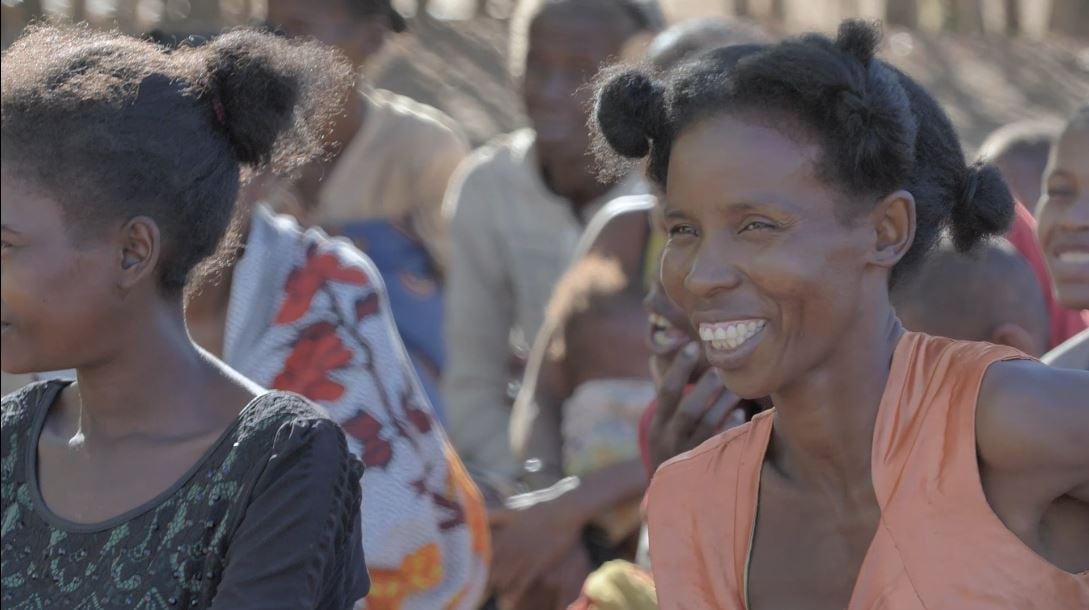
Liva smiles outside her home in Ankilimalinike, Madagascar | © HI
Liva smiles outside her home in Ankilimalinike, Madagascar | © HI
Many disadvantaged people, especially women, are unaware that they can plan their family situation. Due to many factors, which may be cultural or linked to the standard of living, they have little choice regarding their sexual lives and the number of children they want. This can have a detrimental effect on women’s health, and considerable socio-economic consequences.
HI is part of the WISH2ACTION project, which focuses on sexual and reproductive health. The program aims to provide family planning services to the most disadvantaged populations, including women (especially young women) and people with disabilities in the Analamanga, Atsinanana, and Atsimo Andrefana regions of Madagascar. To support the project, HI provides technical support to each of the program’s partners to promote inclusion.
"My name is Liva. I am 41 years old, married and I have seven children.
I started having children when I was twenty years old, and then just never stopped. My first child is now twenty-one years old and my last is seven months old. I have not been able to enjoy my youth. I feel more and more tired from providing for my seven children. Even sending them to school, I just can't anymore.
I have a disability in my left leg. I can't afford to have more children. I already have seven children, and that's enough. I'm tired.
When I was told that there are ways to plan or stop having children, I was excited to do it.
I earn my living by making 'Mokary'. I borrow rice and oil that I pay back the next day when I have managed to sell. When I am tired after work, I like to go and chat with my friends. We also like to get together to play cards.
 The AFHAM, which is an organization of disabled women and partner of HI, had a mission through the WISH2ACTION project. They came inform us about the practice of family planning here in Ankilimalinike to stop unplanned pregnancies. It really resonated with me! I decided to practice it.
I was convinced by their advocacy. Now, when I am with my husband, I am no longer afraid of getting pregnant. In addition, the doctor in the health center will follow my family planning practice.
“Since then, we have created our own organization called FI.SE.MIVOA for disabled people here in Ankilimalinike. There are many things that I don't know how to do, but I know how to communicate and exchange with people. So, I was chosen to be the president of our association.
Even though I am a person with a disability, I can provide for myself and make my own decisions. I can even help my mother sometimes. I don't need anyone to take care of me.”